
Our client, Wendy, is a Canadian citizen who married her American husband in Canada. Both of them are currently working as teachers in China and wish to get divorced in China, seeking the division of marital assets and asserting child custody rights.
In such a situation, our first step would be to assist the client in determining whether Chinese courts have jurisdiction. This usually depends on factors such as the couple’s residence, nationality, and the place where they registered their marriage.
In such a situation, our first step would be to assist the client in analyzing whether Chinese courts have jurisdiction. This usually depends on factors such as the couple’s residence, nationality, and the place where they registered their marriage.
In this case, both our client and her husband reside in China, so they can get divorced in China through court litigation. When filing for divorce, our client needs to prepare the following documents: personal information of both spouses and the Canadian marriage certificate authenticated by the Chinese Embassy.
Regarding which court has jurisdiction, generally, it is the court located in the defendant’s place of residence. In this case, our client Wendy is the plaintiff, and her husband is the defendant. Her husband’s place of residence is in Nanshan District, Shenzhen. Additionally, because the Shenzhen court has centralized jurisdiction over foreign-related marriages in the Longhua District Court of Shenzhen, this case falls under the jurisdiction of the Longhua District Court of Shenzhen.
In a divorce lawsuit, if both spouses can reach an agreement on divorce matters, they can apply for the court to settle the case through mediation. If the case is settled through mediation, the judge will issue a mediation agreement. The mediation agreement carries the same legal effect as a judgment. If one party fails to fulfill the obligations specified in the mediation agreement, the other party can apply for court enforcement.
During the divorce proceedings, the court will address issues such as the division of marital assets and child custody arrangements, if applicable. It is important to provide necessary documentation and evidence related to these matters.
After considering all the relevant factors and evidence presented, the court will make a decision regarding the divorce and issue a divorce decree or judgment. Once the divorce decree is issued, the parties must follow the court’s orders regarding the division of assets, child custody, and any other provisions specified in the decree.
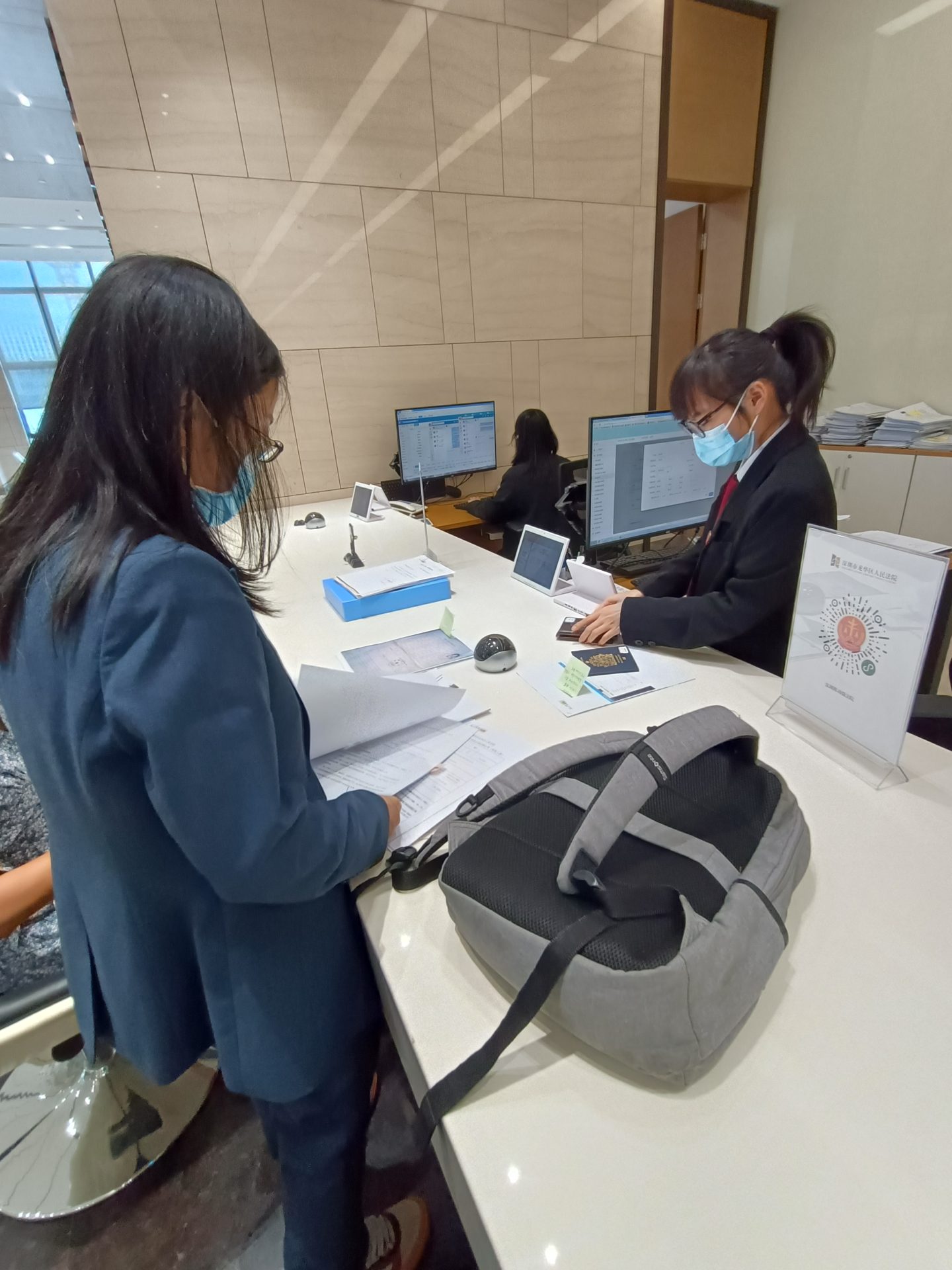
In this case, our client has entrusted us as her lawyers and needs to sign an POA with us. The POA is a necessary document to be submitted to the court. Since our client is a foreign national, Chinese courts typically require notarization and authentication of the POA. Notarization and authentication processes are time-consuming and expensive. Therefore, we have applied to the court to witness the process of our client signing the authorization letter. This way, there is no need for notarization and authentication.
We made an online appointment to sign the authorization letter at the court premises. Longhua Court is far from our location and our client’s residence. We both departed three hours in advance and headed towards Longhua Court. The court is located in a relatively remote area with a low level of commercialization. Our client arrived too early and wanted to have lunch, but there were no restaurants nearby. We helped her find the nearest Starbucks, where she could have a simple lunch and refreshment.
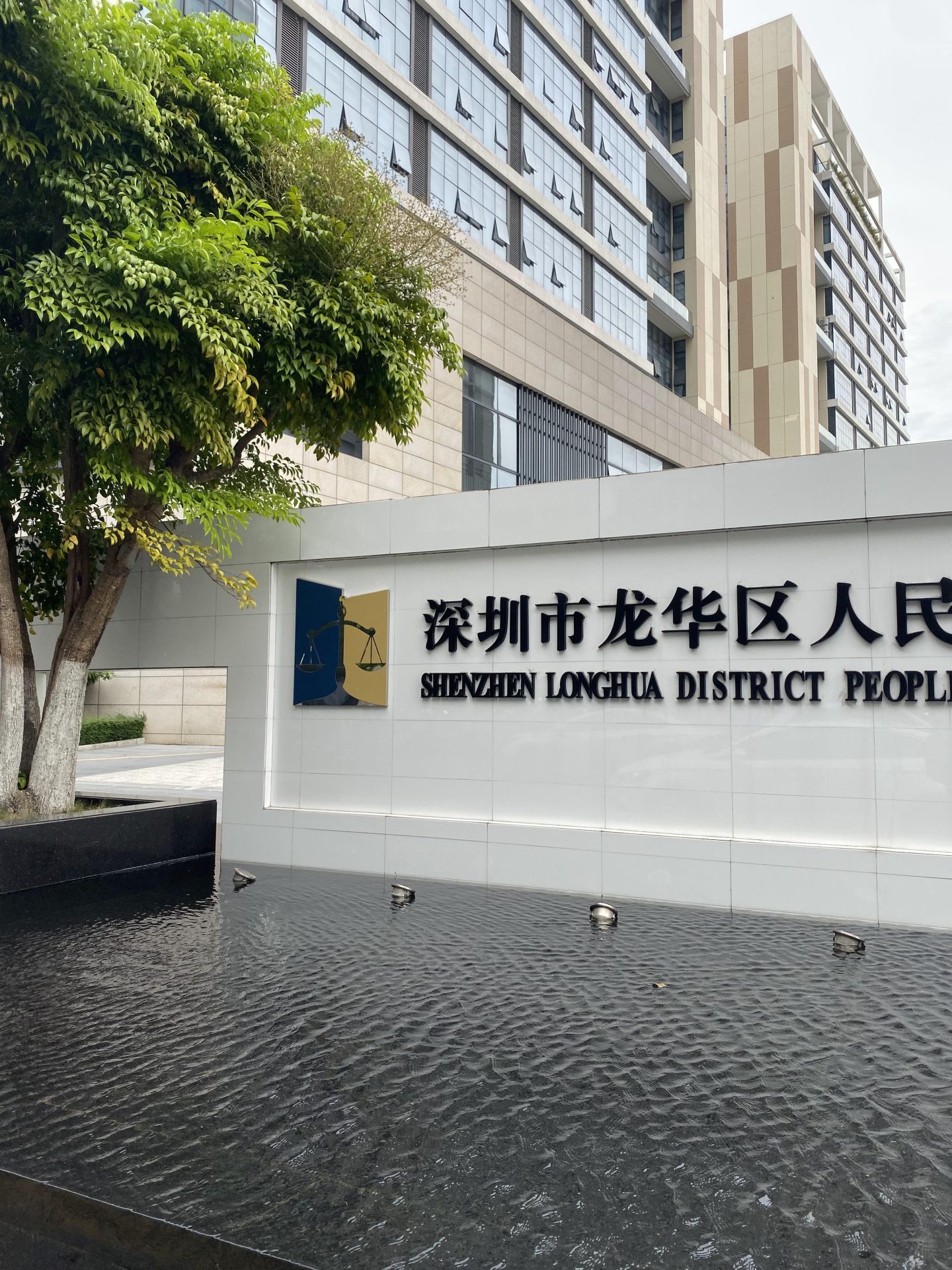
The entrance of the court is divided into two lanes: one for litigants and the other for lawyers. We arrived at the court promptly at 2:00 PM when the court opened and found a long queue already formed at the entrance.
After signing the authorization letter before the judge in the filing court, we guided our client Wendy to a sofa in the corner. We inquired if her husband is willing to settle the case amicably. The fastest way to achieve this would be to request the judge to issue a mediation agreement, which would state that both parties voluntarily agree to divorce and divide their assets according to the terms of the mediation agreement. In China, a mediation agreement holds the same legal effect as a judgment. If the other party fails to fulfill the obligations outlined in the document, one can apply to the court for enforcement.
However, it is important to note that some countries do not recognize mediation agreements issued by Chinese courts and only recognize judgments issued by Chinese courts. Therefore, we advised Wendy to consult her lawyer in Canada and inquire whether the Canadian government recognizes mediation agreements from China.
After consulting with her Canadian lawyer, our client informed us that the mediation agreement needs to be notarized and authenticated. This means that we need to have the mediation agreement notarized by the Chinese Notary Office and then authenticated by the Canadian Consulate in China.
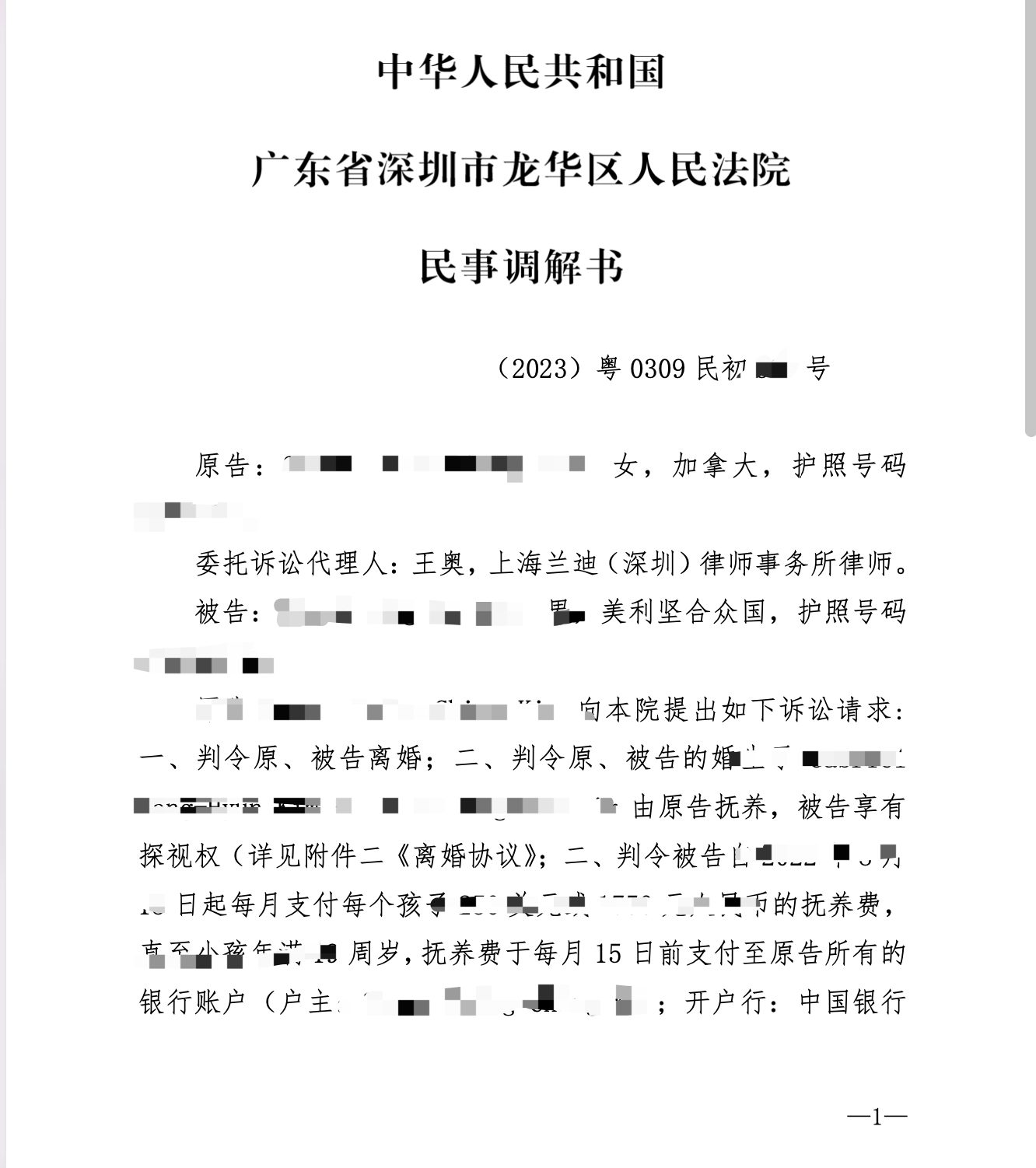
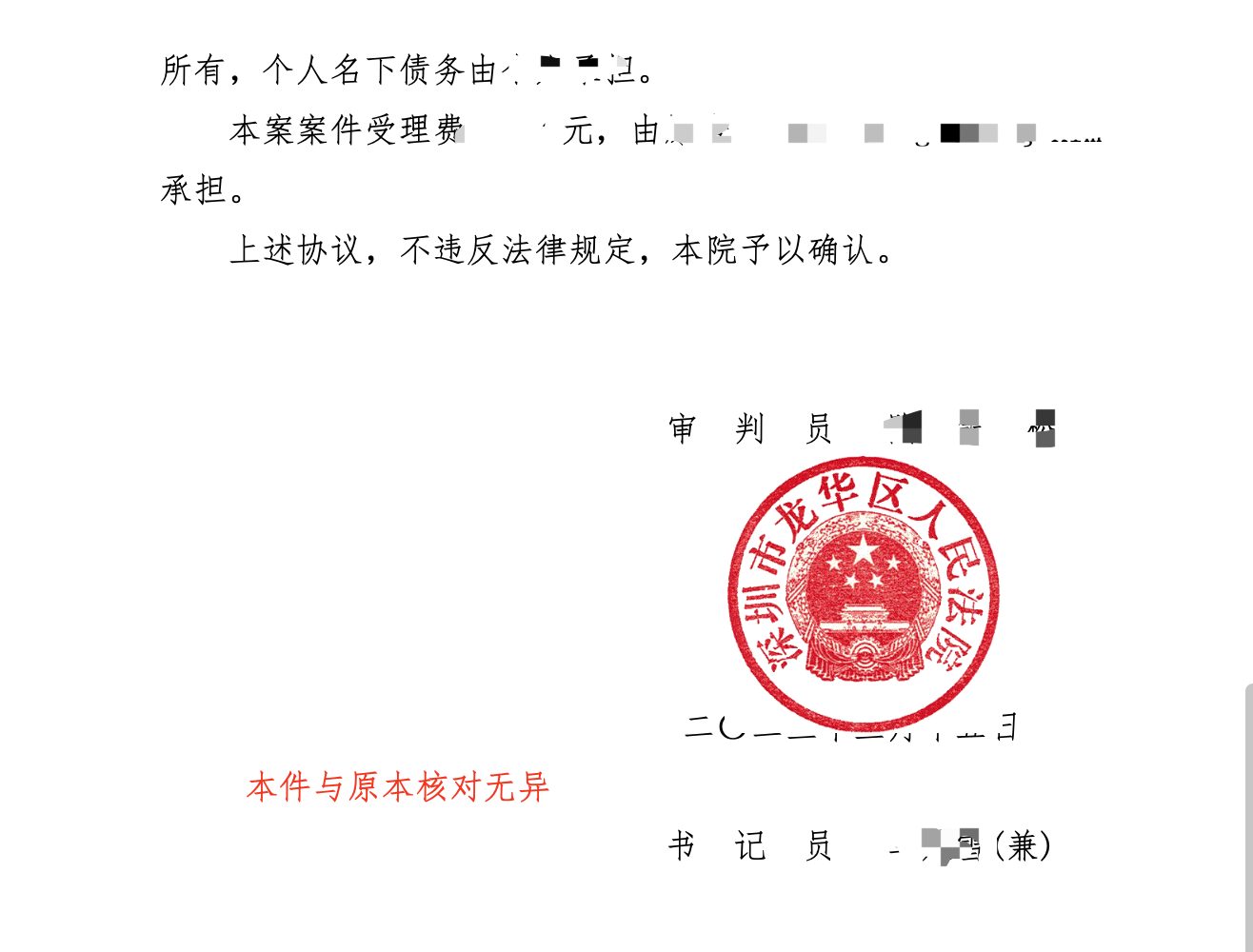
Since the mediation agreement in this case was sent to us by the judge via WeChat and no physical copy was issued, we took screenshots of the mediation agreement received through WeChat and submitted them to the Notary Office. The Notary Office notarized the process of receiving the mediation agreement via WeChat and also notarized the content of the agreement.
The picture below is the mediation letter issued by the court
 Schedule A Free Consultation