
Look at the following international trade traps. How many have you stepped on?
What are the risks in international trade that need attention? How many traps have you fallen into?
1. On Alibaba, the salesmen chat with you in ambiguous language.
When chatting on Alibaba, Chinese people used phrases such as dear, honey, I miss you, I love you, and so on …
Do not think that the salesperson fell in love with you and hint you something. The Chinese idiom when shopping online is the above words. Because people on the Internet come from all over the world, the Internet connects people who live far apart. In order to shorten the distance between people, people will like to use intimate terms, especially in the communication between business and users. Creating a sense of intimacy, hoping to provide customers with more intimate services.
We have even encountered some salesmen who pretend to fell in love with their clients on the Internet in order to discuss the business. So don’t fall into these sweet traps.

2.Inducing you to trade on other platforms.
There may be a situation where the buyers and the sellers meet on Alibaba platform, and the seller claims thatit was inconvenient to chat on Alibaba and wished to continue communication by adding WeChat and WhatsApp.
However, once you leave the Alibaba platform to make purchases, you will lose the protection provided by the Alibaba platform. If any dispute occurs, it is impossible to solve the dispute by virtue of the Alibaba platform.
Our usual solution for transactions on Alibaba’s platform is to file a complaint with Alibaba. We have successfully helped customers to resolve disputes in this way.
3.After placing the order on Alibaba, remit the money directly to the bank account provided by the seller.
The possible risk is that after you remit payment, the seller does not acknowledge the payee as himself/herself and therefore refuses to deliver the products.
How to avoid this situation? Place orders directly through Alibaba and pay on the Alibaba Platform and do not separately choose to pay through any other bank account provided by the Seller.
4.There is no stamp on the proforma invoice and order form sent by the seller.
In China, the essential condition for all contracts to be valid is acknowledgement by the buyer and the seller. If there is no seal of the seller and legal signature of the legal representative, the contract will probably be considered null and void.
Because in China, every company has its own seal, this seal is usually like this: the shape is a circle and the body is composed of Chinese and code.
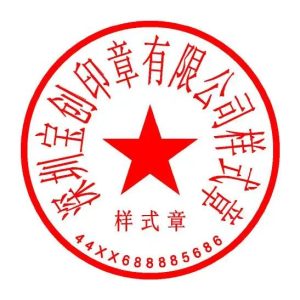
If you see a square or oval seal instead of the above shape, it is probably not the official seal of the company in China. Other shapes of seals are probably other seals carved by the company itself, or seals of the company’s Hong Kong affiliates. In the event of a dispute, a contract without a formal Chinese seal is likely to be rejected.
5.You place an order in the name of company A, but pay with the account of company B.
If the payer and the buyeer are inconsistent, the seller is likely to deny it after a dispute. The seller may claim that you are not the real buyer of the transaction and that you have no right to claim against him.
The above-mentioned problems that are prone to disputes are what we often encounter in the process of litigation.
If your transaction has the above situation, don’t worry, you can CONTACT US. Although the defendant dragged the time with the above defense, we can all refute it. No matter how they argue, we have a plan to deal with it.
 Schedule A Free Consultation