
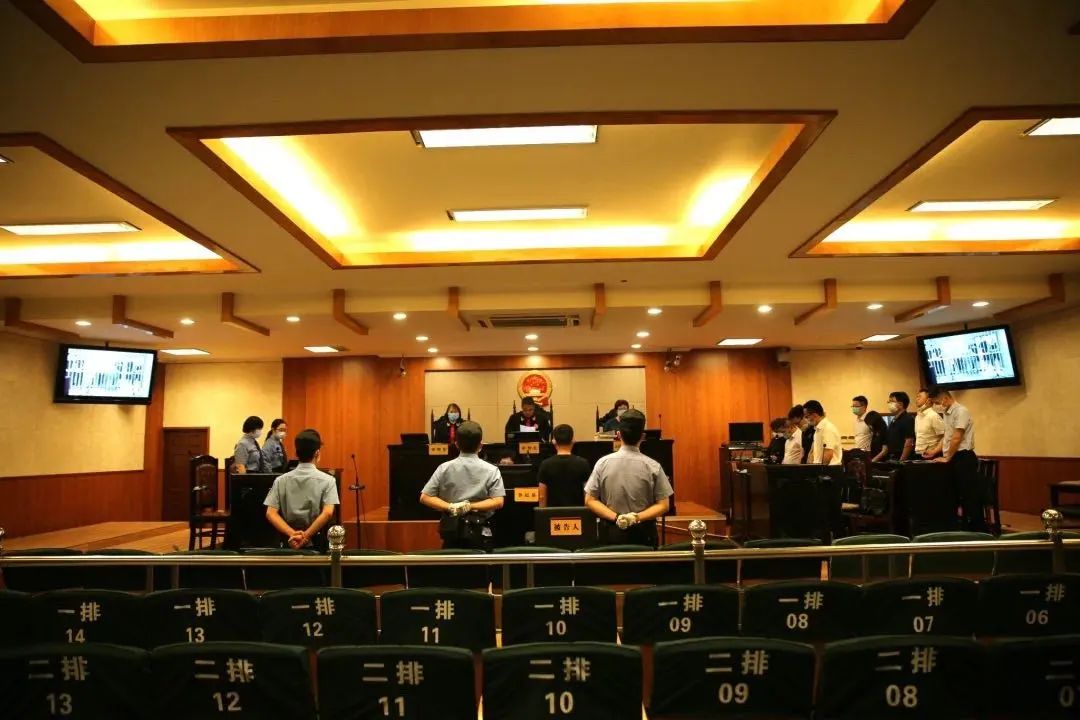
On July 1, 2022, I went to the Luohu Court in Shenzhen with my assistant for a trial. It was a criminal case and our client was arrested for passing off a registered trademark. There were 8 people who committed the crime together. Three of them are still in detention centers, and the other five have been released on guarantee pending further investigation. [Suspects whose crimes are minor and have no social harm can apply to wait for trial at home and do not need to be detained in detention centers] But this time, they also appeared at the scene of the trial because of the opening of the trial.
Today, through the trial of this case, I would like to introduce you to the trial process of criminal cases in China.
After being arrested by the police, the suspect is taken to the detention center, which is a temporary place of detention where all suspects awaiting trial in court are held. Generally speaking, the time for a criminal suspect to wait for trial is 3 to 6 months. [See my other article on the difference between detention centers, prisons, and compulsory detention centers.]
At the opening of the trial, all the criminal suspects who are detained or released on guarantee pending trial will come to the scene. But because of the epidemic situation, the current detainees can only participate in the trial through video conference, and there are two large screens at the trial site, connected to the accused in the detention center so that the detainees can communicate with the court scene in real time video calls.
After the trial began, a lawyer of one of the main offenders applied to the judge, saying that he had not met his client before the trial, so he applied to temporarily begin meeting his client at the court site. Meeting with clients is the lawyer’s right, so the judge had no way to refuse and had to agreed to the lawyer’s request.
Therefore, all of us, including other criminal suspects and their family members and lawyers, can only wait for this lawyer outside the courtroom. It also delayed our court session.
The lawyer’s meeting ended after 20 minutes, and the tribunal officially began hearing the case.
The process of a criminal trial in China mainly includes the following stages:
Identification And Notification of Rights
The presiding judge (the chief judge) must verify the identity and read out the rights of the accused in the litigation, such as the rights to entrust a lawyer and defend accused himself.
The presiding judge asks the accused and the defender whether to apply for recusal (for example: when the accused and the defender think the judge is favoritism can ask for a change of judge)
Court Investigation
The prosecutor read out the indictment.
The presiding judge asked the prosecutor to further clarify the facts of the crime.
The prosecutor further explained the facts of the crime.
The presiding judge asked the accused’s opinions on the indictment and the above-mentioned clear facts, and what needed to be stated.
The accused expressed opinions and made statements.
Court Inquiry
The prosecutor interrogates the accused to confirm whether the accused agrees with the content of the guilty plea and punishment made earlier. And interrogation on the facts that the accused believes that it is not an embezzlement but misappropriation of funds.
The presiding judge asked the defender if he had any questions to ask the accused.
The defender may question any of the accused present.
The presiding judge asked the accused if he had any property that could be used for repayment.
Cross-examination
The prosecutor presents evidence to the court.
The presiding judge asks the accused and defender whether they have objections to the evidence presented by the prosecutor.
Regarding the accused’s previous confessions and defenses made by the public prosecutor in the public security organs, the presiding judge asked the accused and the defender whether they had any objections.
When the prosecutor finishes presenting evidence, the presiding judge asks the accused and defender if they have any objections.
The presiding judge interrogates the accused and defender whether there is any evidence to submit to the court.
Court Debate
The prosecutor issues a public prosecution opinion.
The accused defends himself/herself.
The defender gives a defense opinion.
The presiding judge asked the prosecutor if he had any supplements.
The Prosecutor issued a supplementary opinion.
The presiding judge asked the accused and defender whether they had any additional opinions.
The presiding judge asked the parties whether they had any new opinions.
Final Statement
The accused may make a final statement after the conclusion of court debate. After the accused has made his/her final statement, the presiding judge announced that the collegial panel would review the disputed issues after the court session and announced an adjournment.
 Schedule A Free Consultation